A7V LOW LIGHT Video Test: Is the Sony FX3 Finally Beatable?
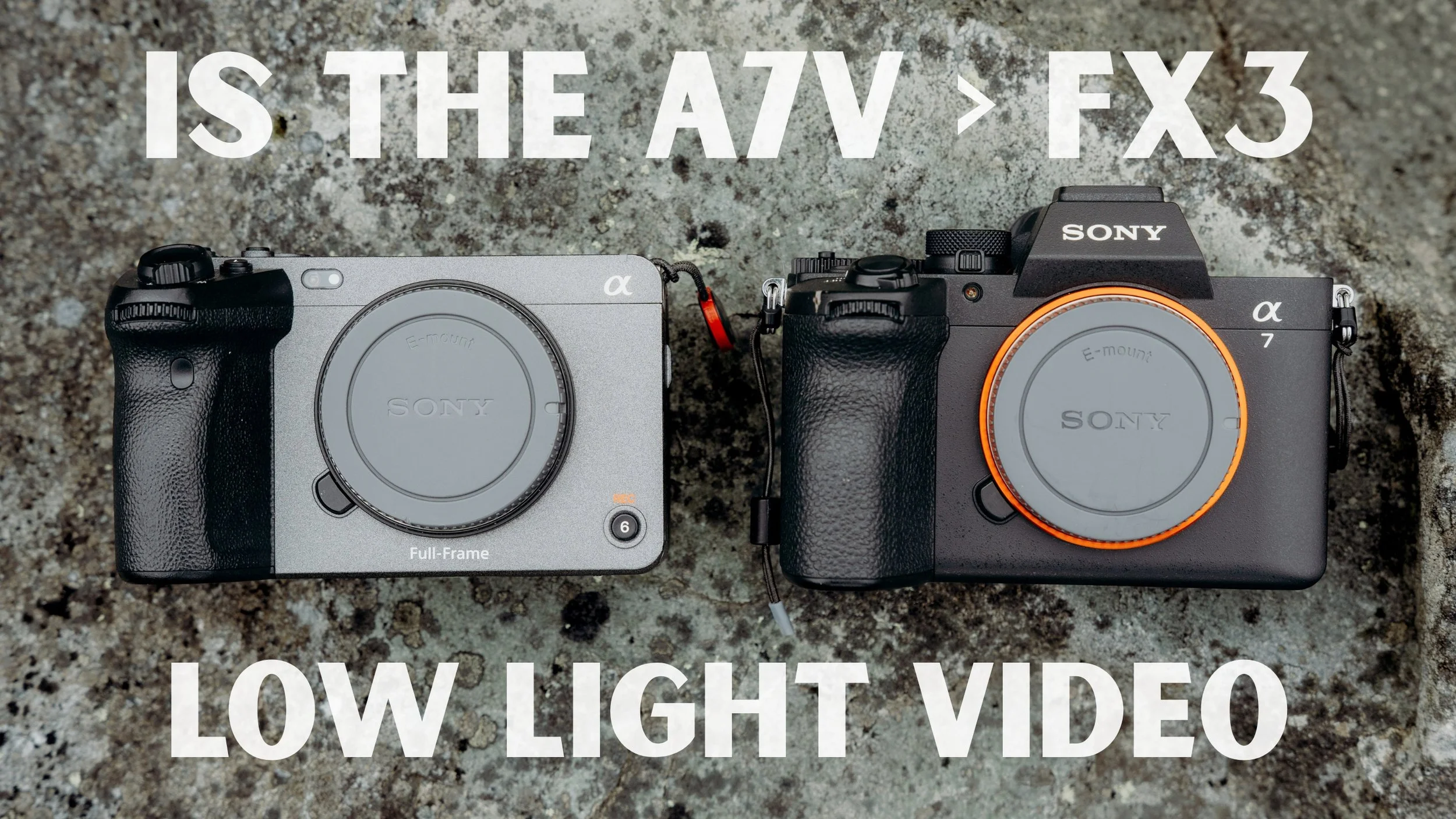
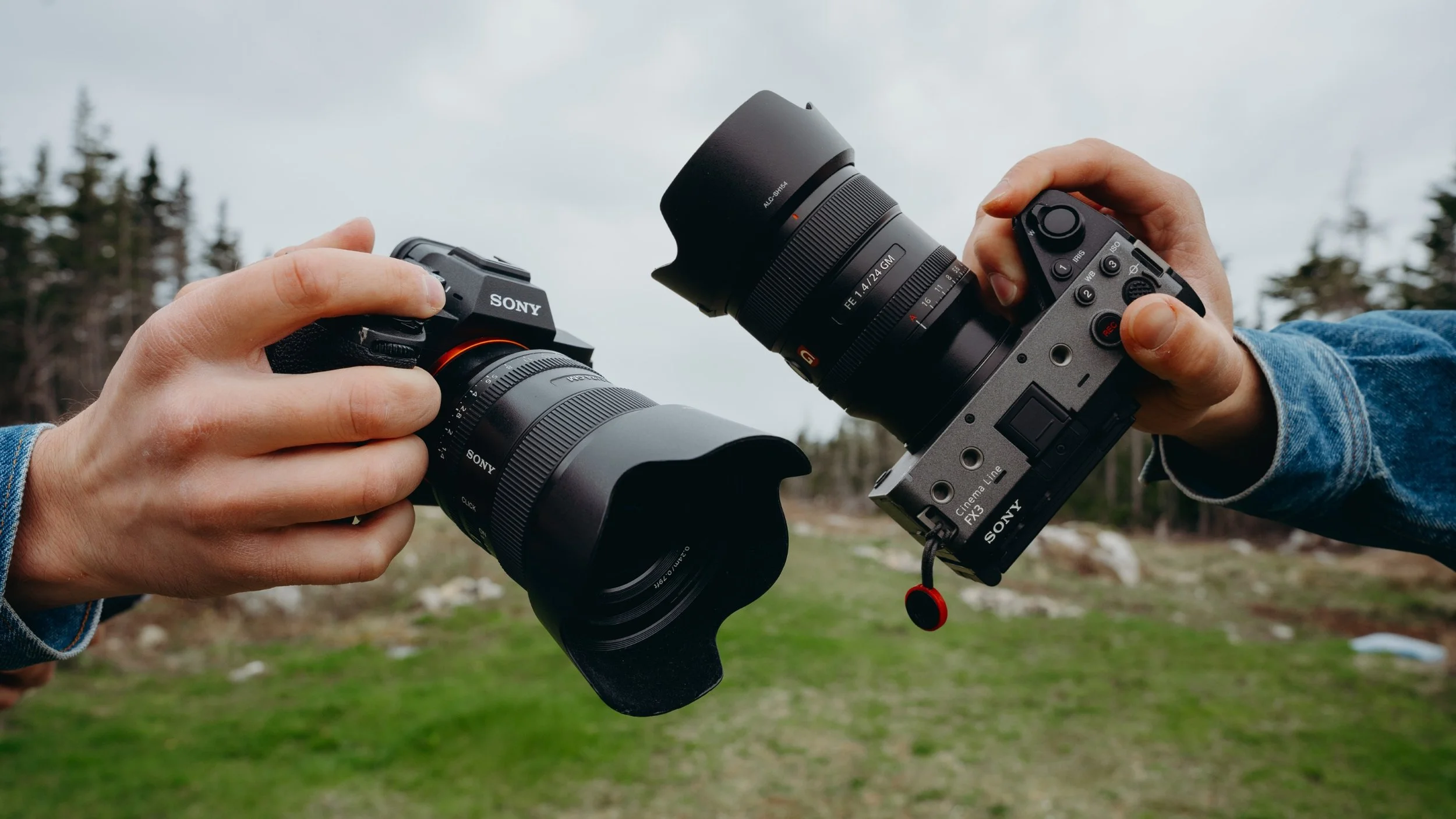
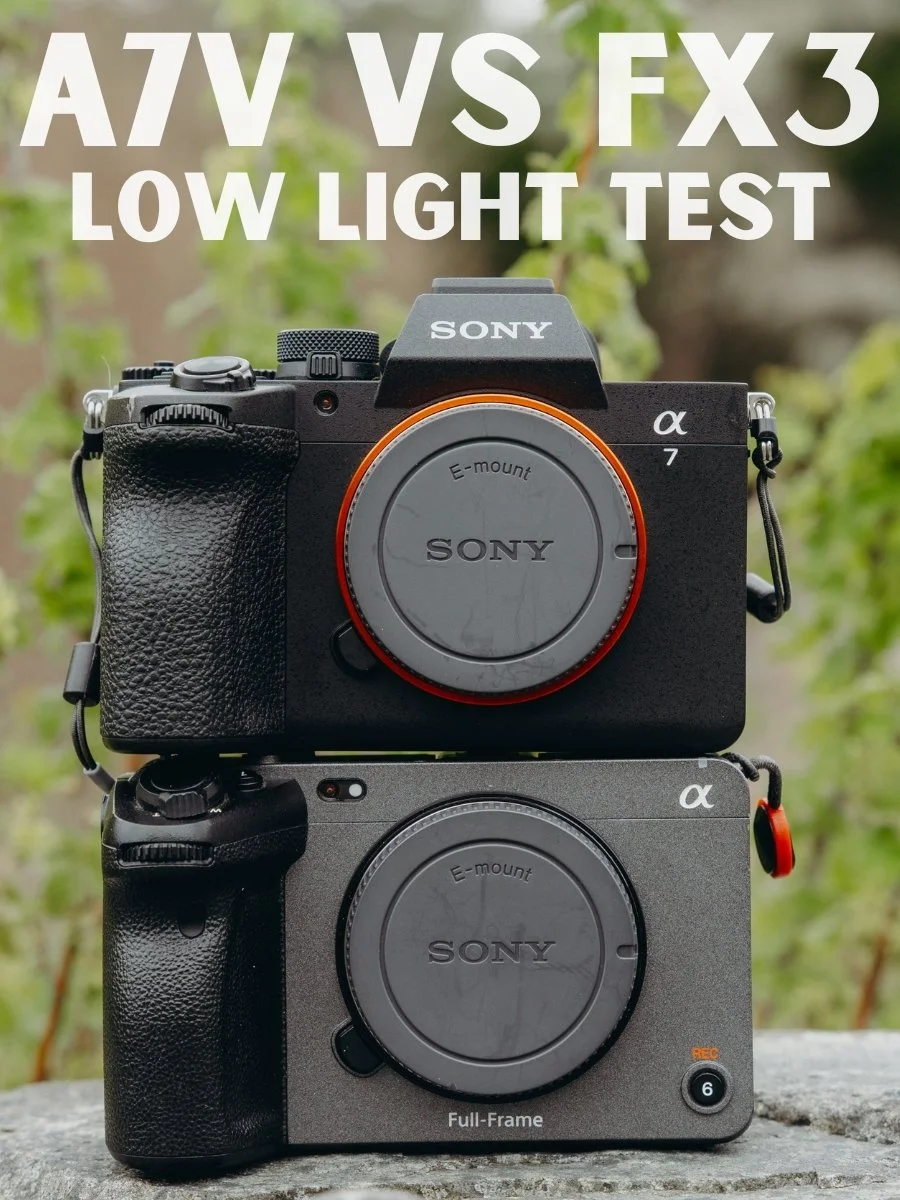
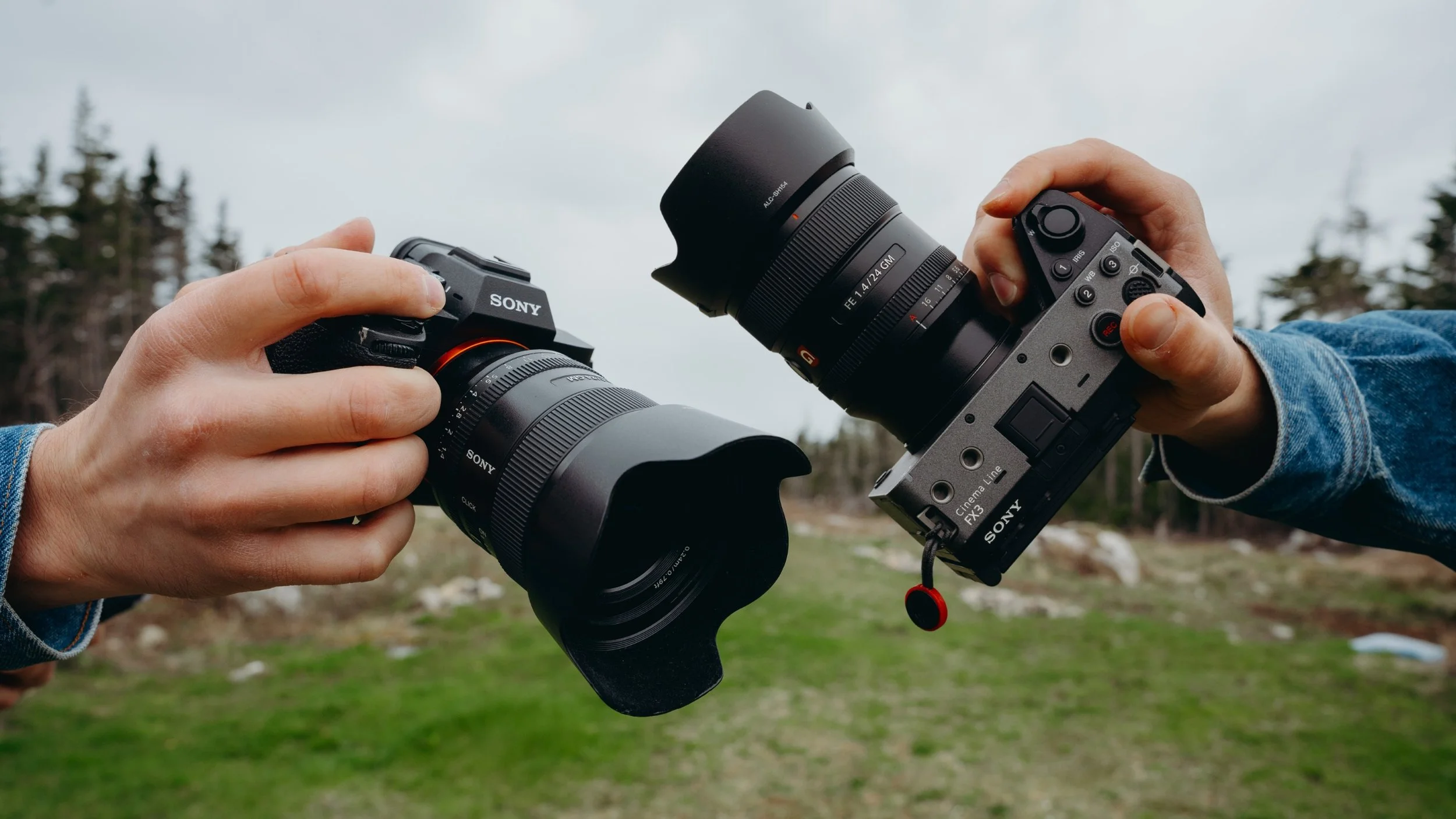
Sony FX3 vs Sony A7 V Low Light Test. Is the A7 V the New Low Light King?
For the last five years or so, whenever people talked about the best low light camera for filmmaking, one camera consistently dominated the conversation: the Sony FX3.
The FX3 built a reputation as one of the best low light video cameras ever made. It became a favourite among filmmakers, documentary shooters, YouTubers, and commercial videographers because of how clean its footage looked at extremely high ISO settings. For a camera this compact, the low light performance felt almost unfair.
A huge reason for that comes down to the FX3’s dual base ISO system. In S-Log3, the FX3 has dual base ISO settings of 640 and 12,800. That second base ISO is what made so many filmmakers fall in love with this camera. You could push the camera into incredibly dark environments and still get clean, usable footage without excessive digital noise or grain. For years, that alone made the FX3 one of the best Sony cameras for low light video.
But then Sony announced the Sony A7 V in early 2026. And suddenly, things got interesting.
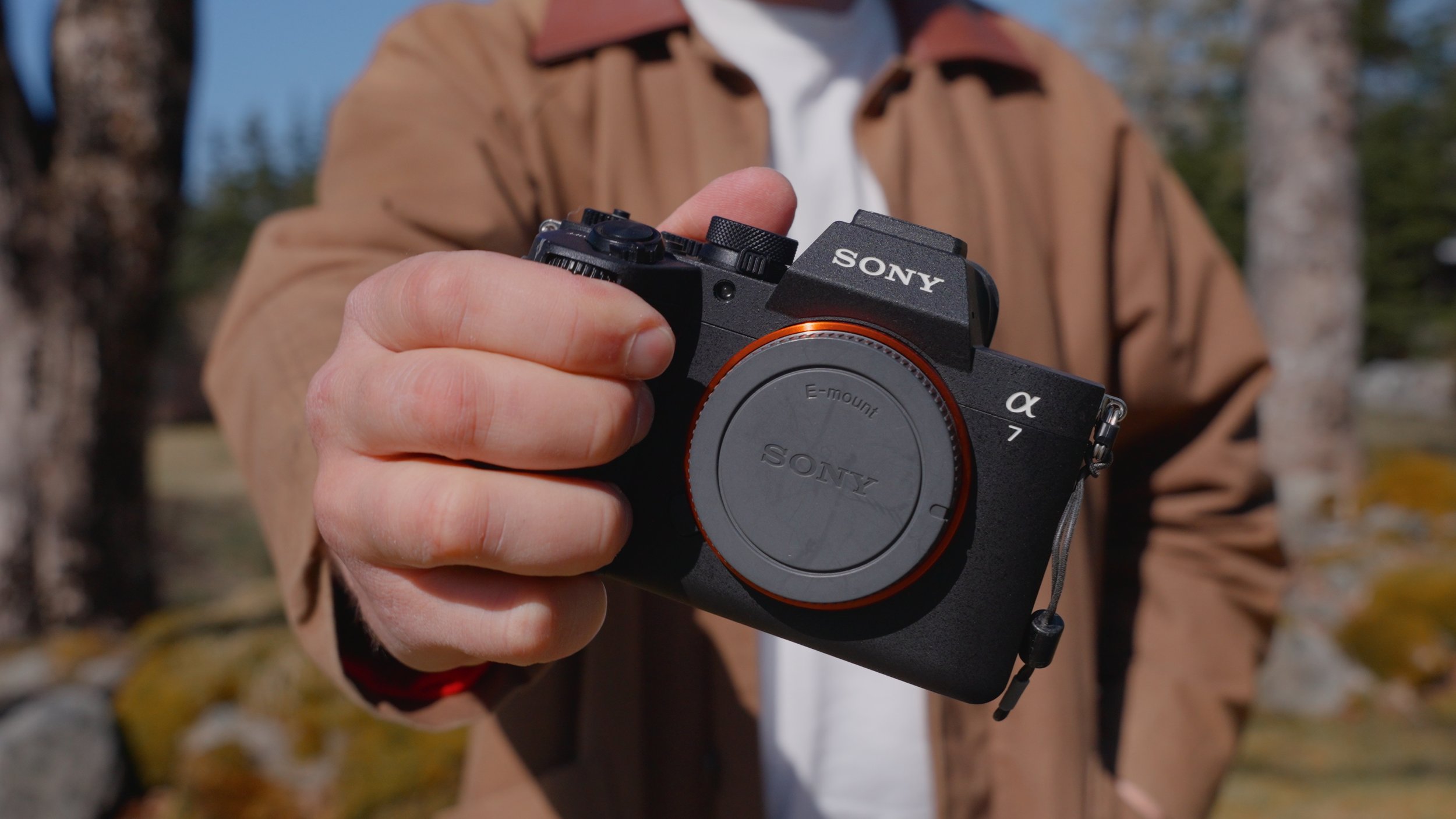
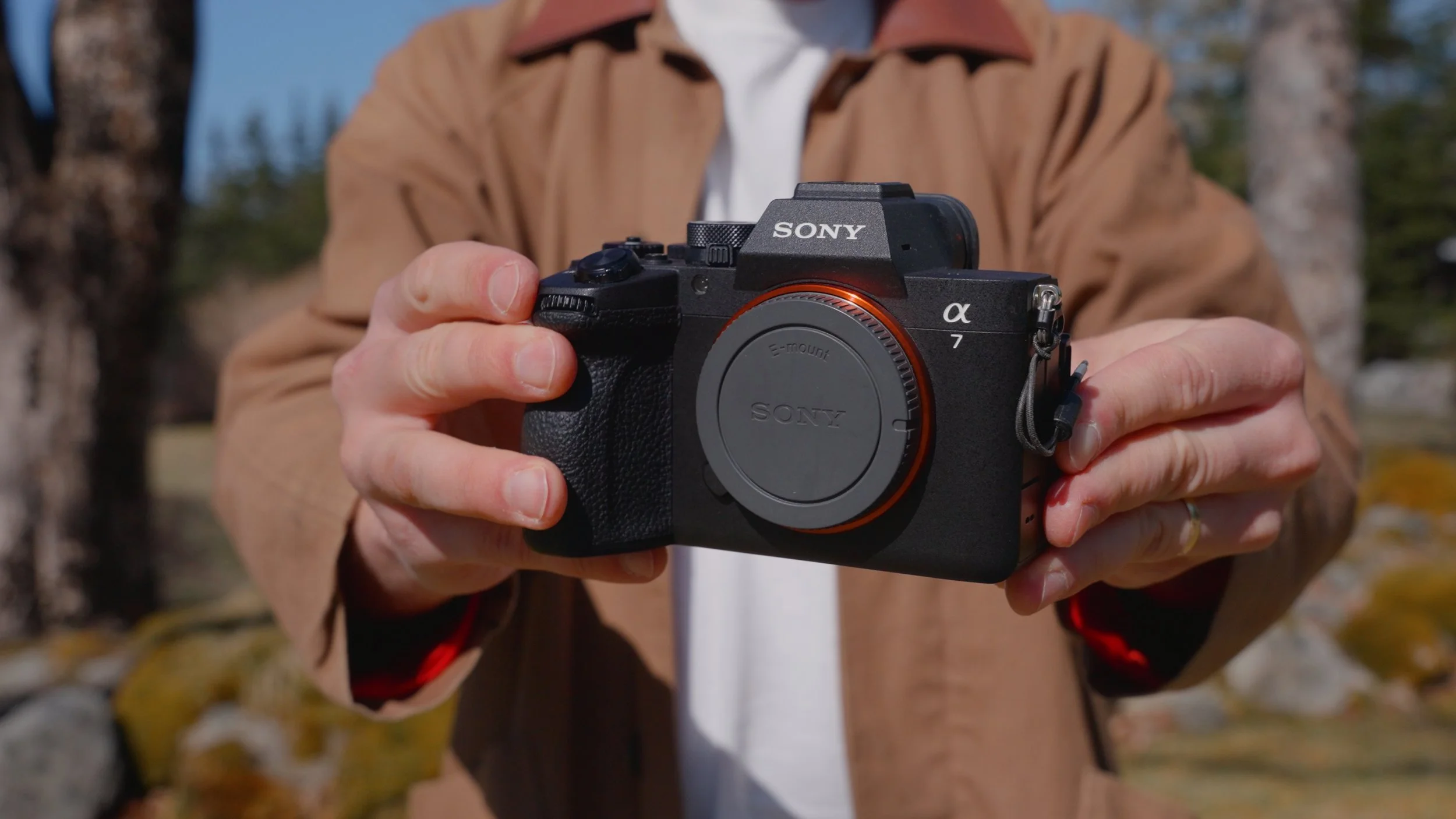
The A7 V introduced a newer sensor, updated autofocus, improved stabilization, and most importantly, its own dual base ISO system. Immediately I started wondering if this newer hybrid camera could actually compete with the FX3 in low light filming. Especially considering the price difference.
So I decided to test them side by side. This article breaks down my real world experience comparing the Sony FX3 vs Sony A7 V in low light conditions, specifically looking at high ISO performance, digital noise, S-Log3 footage quality, and whether the A7 V is now the better overall value for videographers and hybrid shooters.
What Is ISO and Why Does It Matter for Low Light Video?
Before diving into the comparison, it’s worth quickly explaining ISO for anyone newer to video work. ISO refers to how sensitive your camera sensor is to light.
At a low ISO setting like ISO 100, your sensor is not very sensitive to light but it produces a very clean image with low digital noise. That’s perfect for bright sunny days where there’s already plenty of available light.
As you increase ISO, the sensor becomes more sensitive to light, which helps when filming in darker environments like:
• Nighttime city scenes
• Weddings and events
• Indoor interviews
• Documentary work
• Cinematic low light footage
• Evening travel videos
The challenge is that increasing ISO also increases digital noise. At some point, footage starts looking grainy, muddy, and unusable. That’s why low light camera performance matters so much for videographers. Some cameras simply handle high ISO settings much better than others. The FX3 for example has always handled it VERY VERY well.
What Is Dual Base ISO?
Dual base ISO is one of the biggest reasons modern cinema cameras perform so well in low light. Instead of having only one “clean” ISO setting, dual base ISO cameras have two native ISO points where image quality is optimized.
For the FX3 in S-Log3, those base ISOs are:
• ISO 640
• ISO 12,800
For the A7V in S-Log3, the dual base ISOs are:
• ISO 800
• ISO 8000
The immediate concern I had was obvious.
12,800 ISO is brighter than 8000 ISO. On paper, the FX3 should still come out winning in low light conditions. The difference between 8000 and 12,800 ISO is two whole stops of light, which can make a lot of difference.
My hypothesis was that I’d probably get like 80% of the performance out of my A7V that I did from the FX3. I expected it to perform well, but still be quite a bit grainier at ISO 10,000 and 12,800 than the FX3. As the base ISO for the A7V is 8000, I did expect it to be cleaner at this setting, but outside of that, I thought for sure it would fall behind.
Why the Sony FX3 Became the Gold Standard for Low Light Video
The FX3 earned its reputation for good reason. Even years after release, it remains one of the best cinema cameras for solo filmmakers and content creators.
The biggest strengths of the FX3 include:
Exceptional Low Light Performance
The FX3’s 12,800 dual base ISO is legendary for a reason. You can film in environments that would completely fall apart on many other cameras.
Cinema Focused Design
Unlike Sony’s hybrid bodies, the FX3 was built specifically for filmmaking. From cooling to button layout to monitoring tools, everything feels optimized for video production.
Incredible Dynamic Range
S-Log3 footage on the FX3 gives a huge amount of flexibility in post production.
Reliable Professional Results
For client work, reliability matters. The FX3 consistently delivers professional quality footage in difficult shooting environments. And honestly, I’ve loved using this camera.
I bought the FX3 because I was struggling in low light environments with previous setups. Whether I was filming indoors, shooting nighttime content, or working in uncontrolled lighting situations, I needed cleaner footage. I owned two Sony A7IV cameras and to be honest, they handled about 85% of all conditions I needed them for. I’ve had Rolex posting video’s that I’ve made on my Sony A7IV cameras without any issues. But I couldn’t get past the reality that once things got really dark, I was STRUGGLING.
The FX3 solved that problem immediately. My clients have been extremely happy with the footage I’ve created using it. But it’s been 5 years since the FX3 came out, and truthfully, there’s been a lot of advancement in the camera industry since then.
Why the Sony A7 V Is So Interesting to me
The A7V benefits from five years of technological improvements:
• Better autofocus performance
• Better in body image stabilization
• Improved subject detection
• Better white balance detection
• Updated processing power
• Improved usability
And then there’s the price. At the time of writing:
• Sony FX3 price in Canada: roughly $5200 to $5500 CAD
• Sony A7V price in Canada: roughly $3700 CAD
That’s between $1450.00-$1800.00 difference in price. And in today’s economy, that’s significant. That extra money could go toward lenses, lighting, storage, travel, or simply staying in your savings account. I realize this isn’t going to be a determining factor for everyone, but I think it’s worth noting.
And finally, the A7V is a hybrid camera which obviously holds a whole array of benefits for a lot of creators. Again, this won’t matter to everyone, but it does add flexibility to a lot of people running media businesses.
So the big question becomes: Can the A7 V actually compete with the FX3 in low light video? And at what percentage does it compete? 80% as good? 90% as good? That percentage when weighed with some of the benefits mentioned above may seriously impact what camera you end up buying.
My Sony FX3 vs Sony A7 V Low Light Test
I wanted this comparison to focus specifically on noise performance at high ISO settings.
So I tested both cameras in:
• S-Log3
• S-Cinetone
The goal was simple. I wanted to see how much digital noise each camera produced at different ISO levels and whether the FX3 still held a massive advantage.
Sony A7 V vs FX3 in S-Log3
All footage was filmed in 4K 24 fps footage in SLOG-3
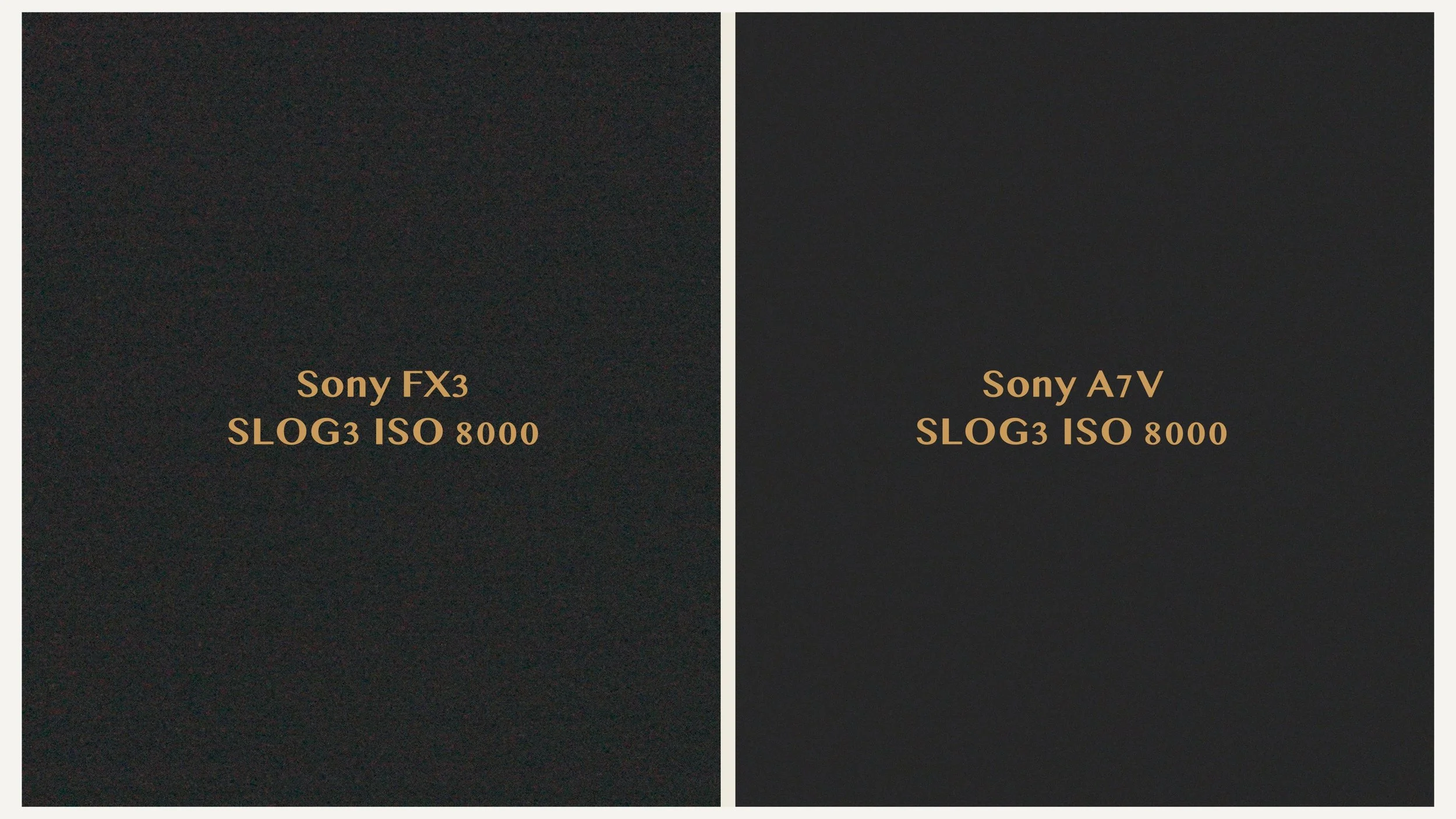
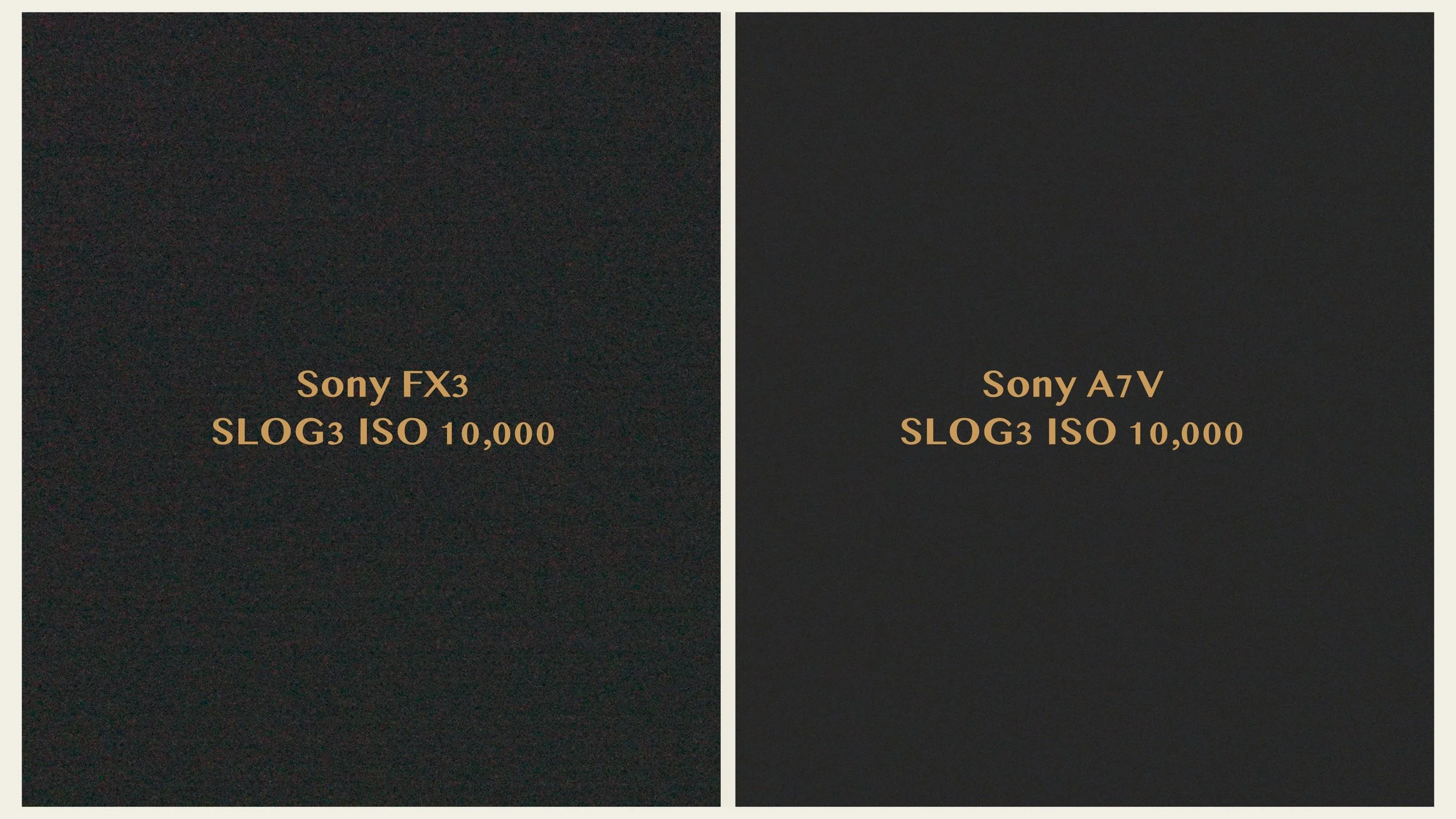
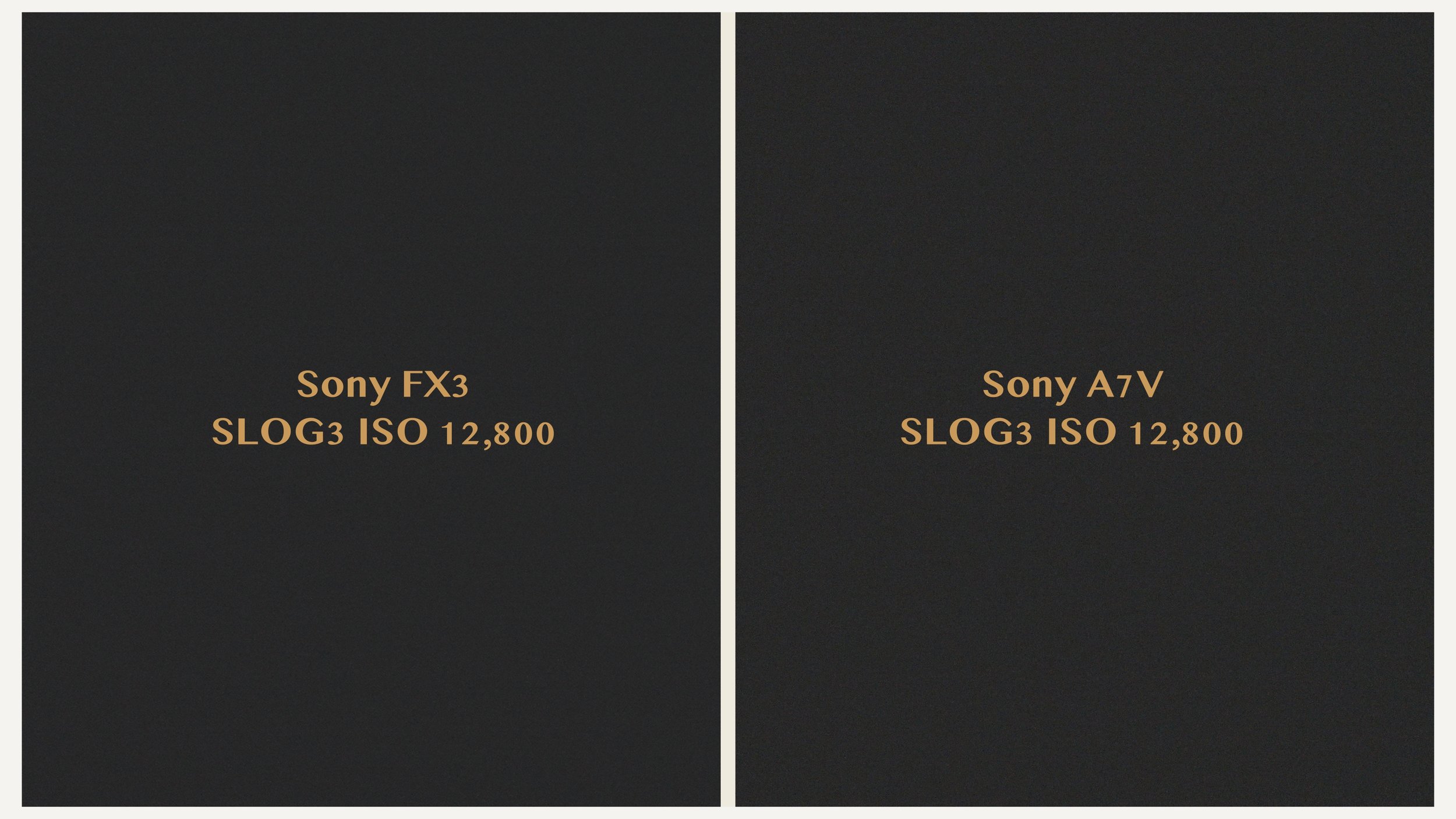
At the A7V’s dual base ISO of 8000, the footage looked incredibly clean, which is kind of what I expected as this was one of it’s dual base ISOs. But what shocked me was how good the Sony A7V looked at 10,000 ISO, especially when compared to the FX3. I honestly assumed the FX3 would clearly outperform it. Instead, the A7 V remained surprisingly clean with very controlled digital noise.
Now, I should mention something important here. I suspect the A7 V may have some internal noise reduction happening automatically, particularly when filming in 4K60 (which is the reason we’re still getting a crop). I searched through settings and couldn’t find a way to disable it though, so this is just speculative. So it’s possible Sony is helping the image behind the scenes.
But regardless of how it’s happening, the results impressed me.
12,800 ISO Performance
This was the real test. The FX3’s 12,800 dual base ISO is where the camera truly shines. And to be fair, the FX3 had a noticable improvement compared to it’s 8000 and 10,000 ISO performance. You could clearly see the image become cleaner at 12,800 (which is what I’ve always loved so much about this camera. It really does do an incredible job).
But here’s what surprised me: The A7 V looked shockingly close. I expected the FX3 to completely dominate here. Instead, the A7 V felt much more competitive than I anticipated.
S-Cinetone Performance Comparison
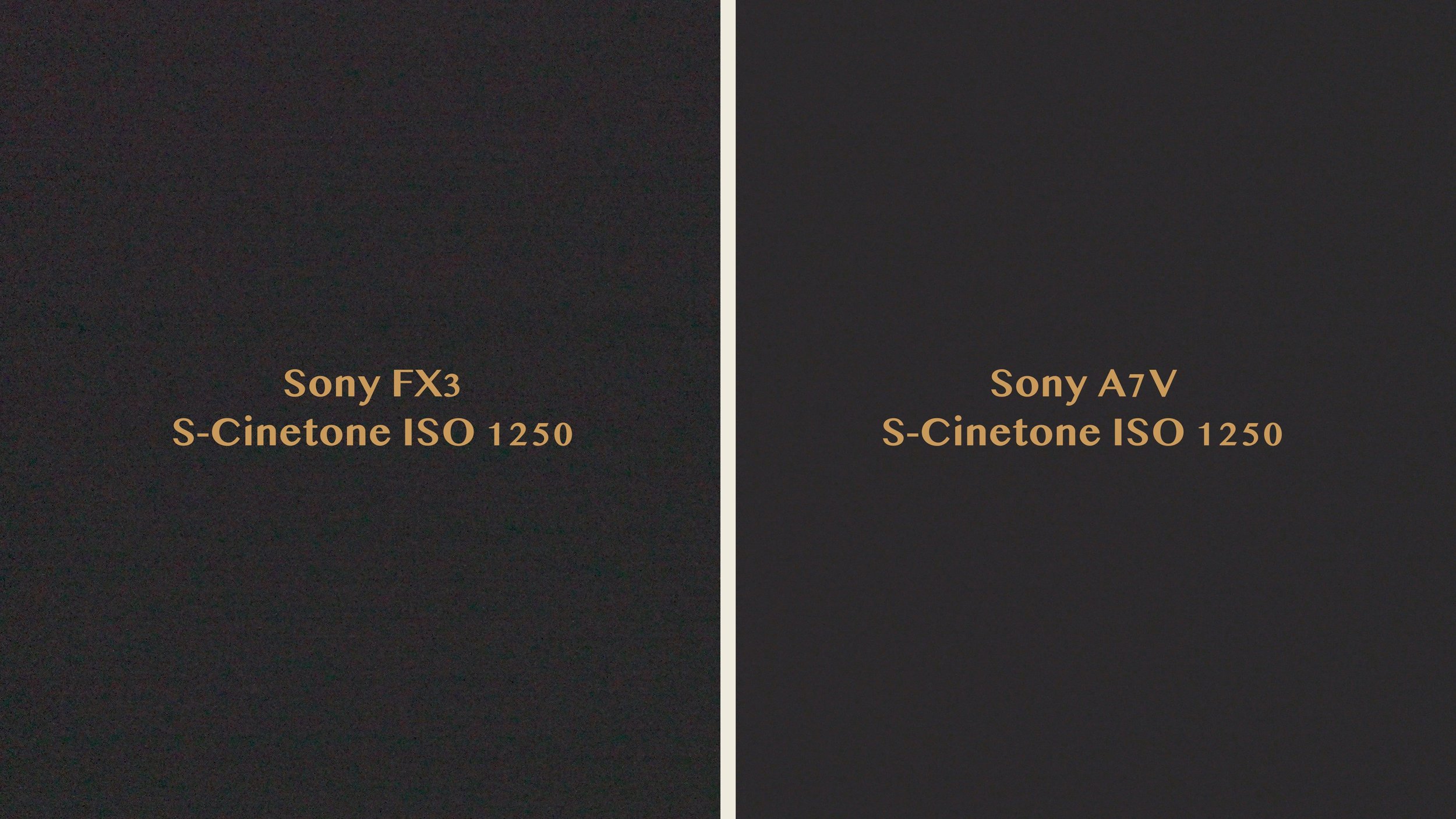
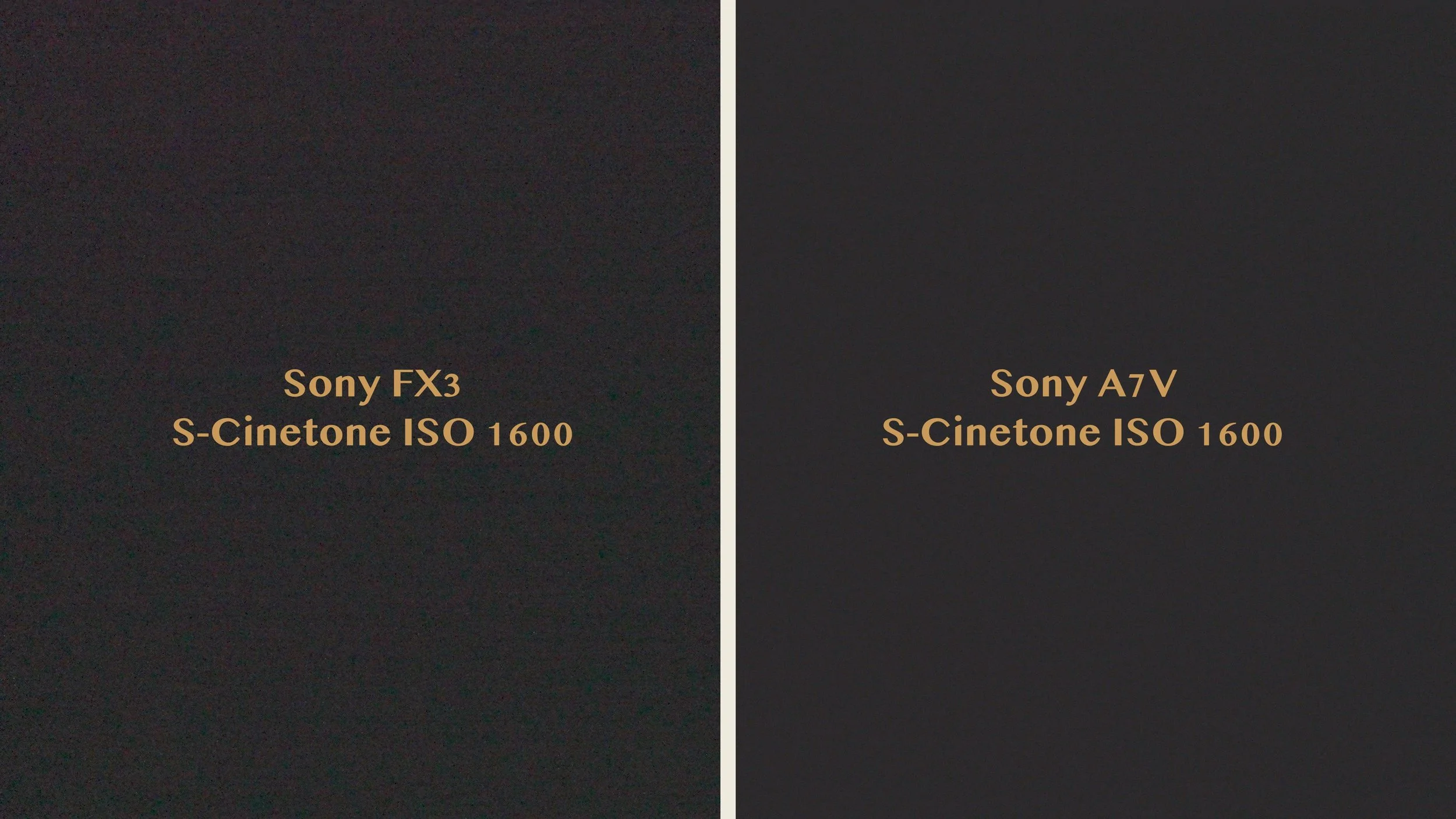
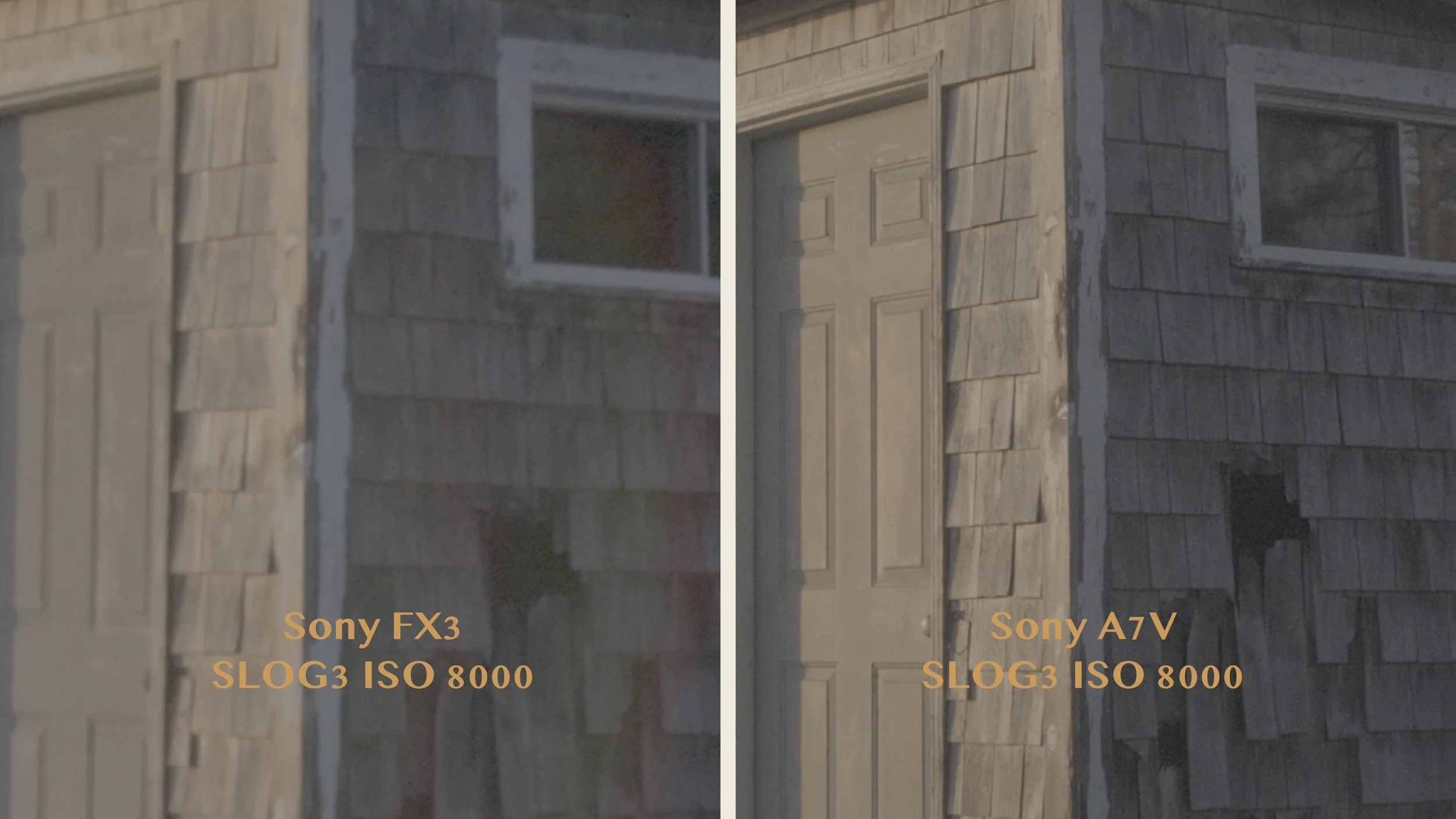
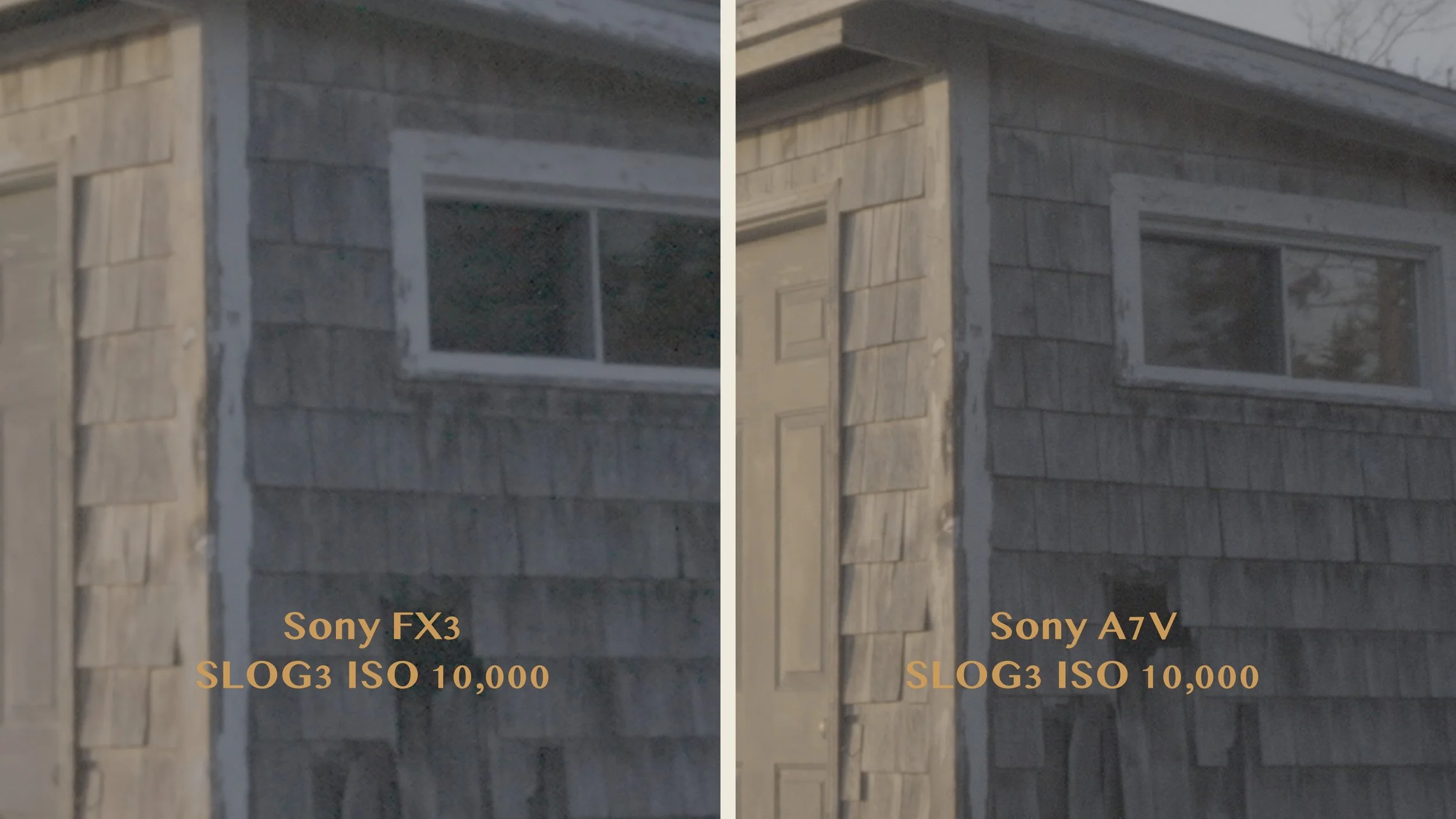
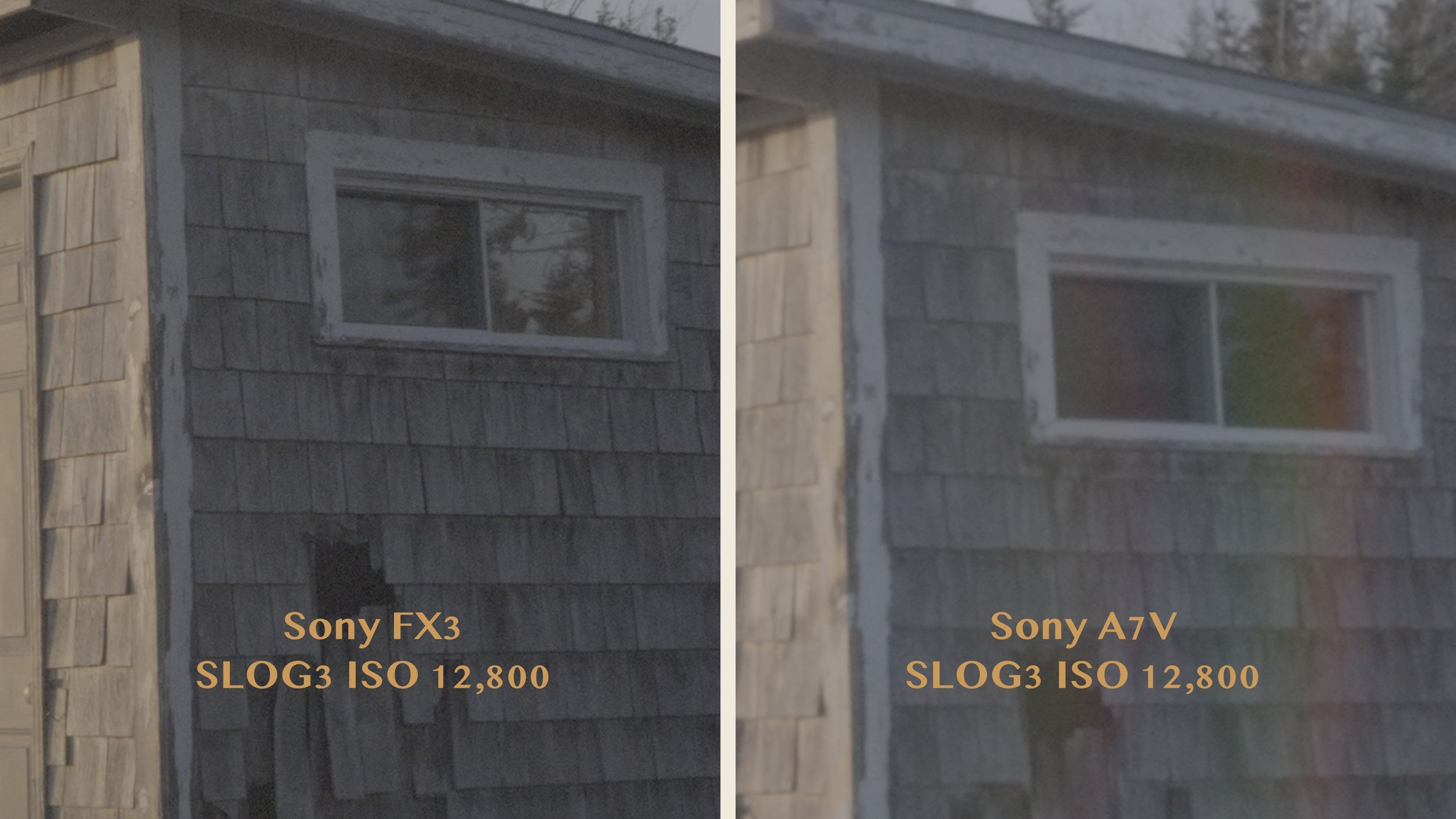
I also tested both cameras using S-Cinetone. In S-Cinetone, the dual base ISO settings are different:
• A7 V: 125 and 1250 ISO
• FX3: 100 and 2000 ISO
At 1250 ISO, the A7 V produced a cleaner image.
At 2000 ISO, the FX3 finally started pulling ahead slightly.
But again, the gap was much smaller than I expected. The A7 V remained remarkably competitive throughout the entire test and outperformed the Sony FX3 at both 1250 and 1600 ISO. That consistency was one of the most surprising parts of this comparison.
Is the Sony A7 V Better Than the FX3?
This depends entirely on what kind of creator you are. If you are a full time cinematographer who needs a dedicated cinema body every day, the FX3 still makes a ton of sense. It truly is an incredible camera that truthfully, but probably a bit wasted on me. I’ve worked with some world renowned brands and accomplished some things in the industry I’m pretty proud of, but I’m not a cinematographer or film maker; I’m definitely more of a run-and-gun hybrid photographer/videographer. I can admit that.
And the FX3 is built specifically for video production. It’s proven. It’s reliable. And the low light performance is still excellent.
But if you’re a hybrid shooter, photographer, YouTuber, travel creator, or commercial creator doing both photo and video work, the A7 V becomes incredibly compelling.
You get:
• Excellent low light performance
• Modern autofocus
• Better stabilization
• Professional photography capability
• Strong video performance
• Lower price point
And honestly, after running these tests myself, I’m genuinely considering selling my FX3 as I just don’t know if I truthfully need it anymore.
Not because the FX3 is bad. Far from it. The FX3 is still one of the best video cameras Sony has ever made. But the A7 V impressed me way more than I expected.
Final Verdict. Should You Buy the FX3 or the A7 V?
If your primary focus is professional cinematography and dedicated filmmaking, the Sony FX3 is still an incredible choice. Although truthfully at this point, I might wait the extra 6-months or year and guy the FX3-II that’s rumoured to drop “soon”.
But if you want the best balance between photography, videography, low light performance, modern technology, and overall value, I genuinely think the Sony A7 V is the better buy right now.
The fact that it can compete this closely with the FX3 in high ISO low light situations is honestly kind of mind blowing. Especially considering it costs significantly less.
And if Sony eventually releases an FX3 II, that conversation might change all over again. But today, based on my own testing, the A7 V feels like one of the most impressive hybrid cameras Sony has ever released. If you’re trying to decide between the Sony FX3 vs Sony A7 V for low light video, hopefully these tests and observations helped give you some real world clarity.